
Cataracts
Cataracts affect more than 24.4 million Americans age 40 and older. By age 75, approximately half of all Americans have cataracts. Once upon a time, cataracts surgery was considered risky, requiring a lengthy hospital stay. Today, however, cataract surgery is one of the most common and successful medical procedures performed.
At Asheville Eye Associates, our team of experienced providers screen for and treat cataracts using the latest in cataract technology.
What Causes Cataracts?
Symptoms of Cataracts:
- Colors appearing less bright and vivid
- Sensitivity to glare from lamps, the sun, or headlights
- Difficulties seeing at night
- Problems reading, watching television, or seeing facial expressions
- Halos around lights
- Frequent need for a stronger eyeglass prescription
- Distortion or ghost images
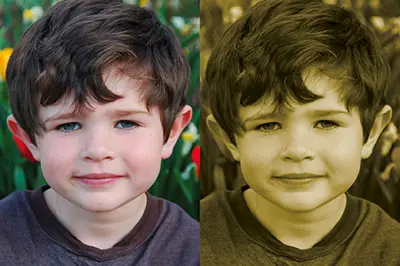
Cataracts can make images appear dull or yellow

Blurry or dim vision is a symptom of cataracts

Cataracts can cause distortion or ghost images
In order to see clearly, your cataract needs to be replaced with an intraocular lens (IOL) during cataract surgery. The type of cataract surgery and the IOL used during surgery will determine what your vision looks like after surgery. Typically, cataract surgery is needed only once per lifetime for each eye, so your Asheville Eye Surgeon will carefully consider your unique eye and lifestyle needs to recommend a surgical plan and an intraocular lens (IOL) to help you make the most of your opportunity.
Cataract Surgery
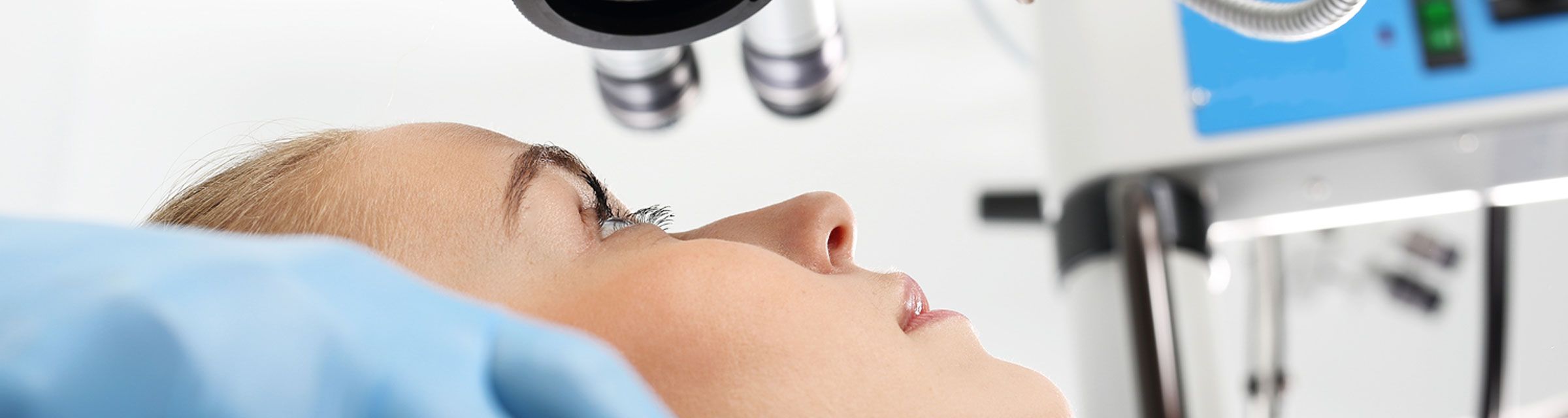
Cataract surgery is a safe and commonly performed procedure to restore clear vision by removing a cloudy lens from the eye. After applying numbing drops to keep you comfortable, the surgeon makes a very small incision in the cornea. Through this opening, the cloudy lens is broken up with gentle ultrasound energy and removed. A clear artificial lens, called an intraocular lens (IOL), is then placed in the eye to replace the natural lens. The incision is so small that it usually heals on its own without stitches. The entire surgery typically takes less than 20 minutes, and most patients notice improved vision within a few days.
The Latest in Cataract Technology
Asheville Eye offers the RxSight™ Light Adjustable Lens, the first and only intraocular lens (IOL) that can be customized after cataract surgery. The Light Adjustable Lens is made of a special photosensitive material that can be adjusted in response to ultraviolet (UV) light. This optimization is done by your eye doctor in the weeks following lens implantation through a series of non-invasive light treatments that take only a few minutes each. You will have the unique ability to adjust and preview your vision until it meets your personal desires and lifestyle requirements.
Cataract Surgery at Asheville Eye Associates
You will arrive at the surgery center about an hour prior to your procedure. Once you have been checked in you may be offered a sedative to help you relax. You will then be prepared for surgery. The area around your eyes will be cleaned and a sterile drape may be applied around your eye.
Eye drops or a local anesthetic will be used to numb your eyes. When your eye is completely numb, an eyelid holder will be placed between your eyelids to keep you from blinking during the procedure.
Once the procedure is completed, you will go home soon after and relax for the rest of the day. Everyone heals somewhat differently, but many patients report improvement in their vision almost immediately after the procedure. Most patients return to their normal activities within a day or two.


Personalized cataract surgery can enhance your lifestyle or offer decreased dependence on glasses, but some options are not covered by any medical or vision insurance. Such options include toric, multifocal, extended-depth of focus, and light adjustable IOLs. Patients are asked to cover these costs because they are never covered by any medical or vision insurance. Patient typically pay out-of-pocket, use Health Savings Accounts (HSAs) or Flexible spending Accounts (FSAs), or may apply for financing through Care Credit.
Find out more about Care Credit HERE.

What will my vision be like after cataract surgery?
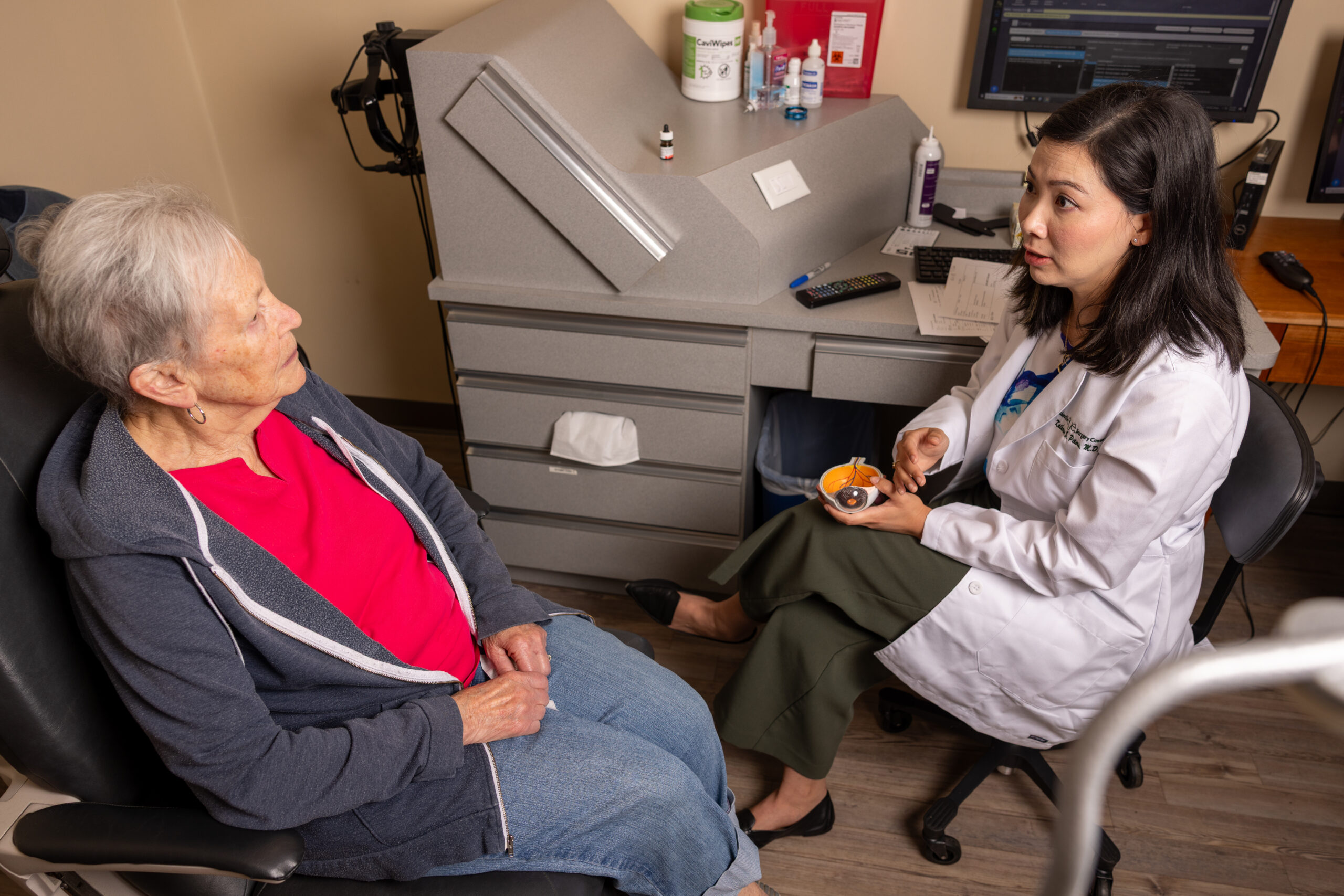
Your vision after cataract surgery depends on the unique characteristics of your eye, and the intraocular lens (IOL) that is implanted. Your Asheville Eye surgeon will do a thorough assessment of your lifestyle and visual needs to recommend a personalized surgical plan.
Secondary Cataracts
People who have had cataract surgery may have their vision become hazy again years later. This is usually because the lens capsule has become cloudy. The capsule is the part of your eye that holds the IOL in place. Your ophthalmologist can use a laser to open the cloudy capsule and restore clear vision. This is called a capsulotomy.
Ready for an evaluation?
Contact Us
Make an appointment with one of our cataract surgeons:
- James D. Crandall, M.D. (Asheville & Hendersonville Offices)
- William L. Haynes, M.D. (Asheville Office)
- Jordan S. Masters, M.D. (Asheville Office)
- Katherine Peters, M.D. (Asheville Office)
- Michael Oswald M.D. (Sylva & Franklin Offices)
- Alexander R. Walters, M.D. (Asheville Office)
- Daniel Yoder, MD (Hendersonville Office)
